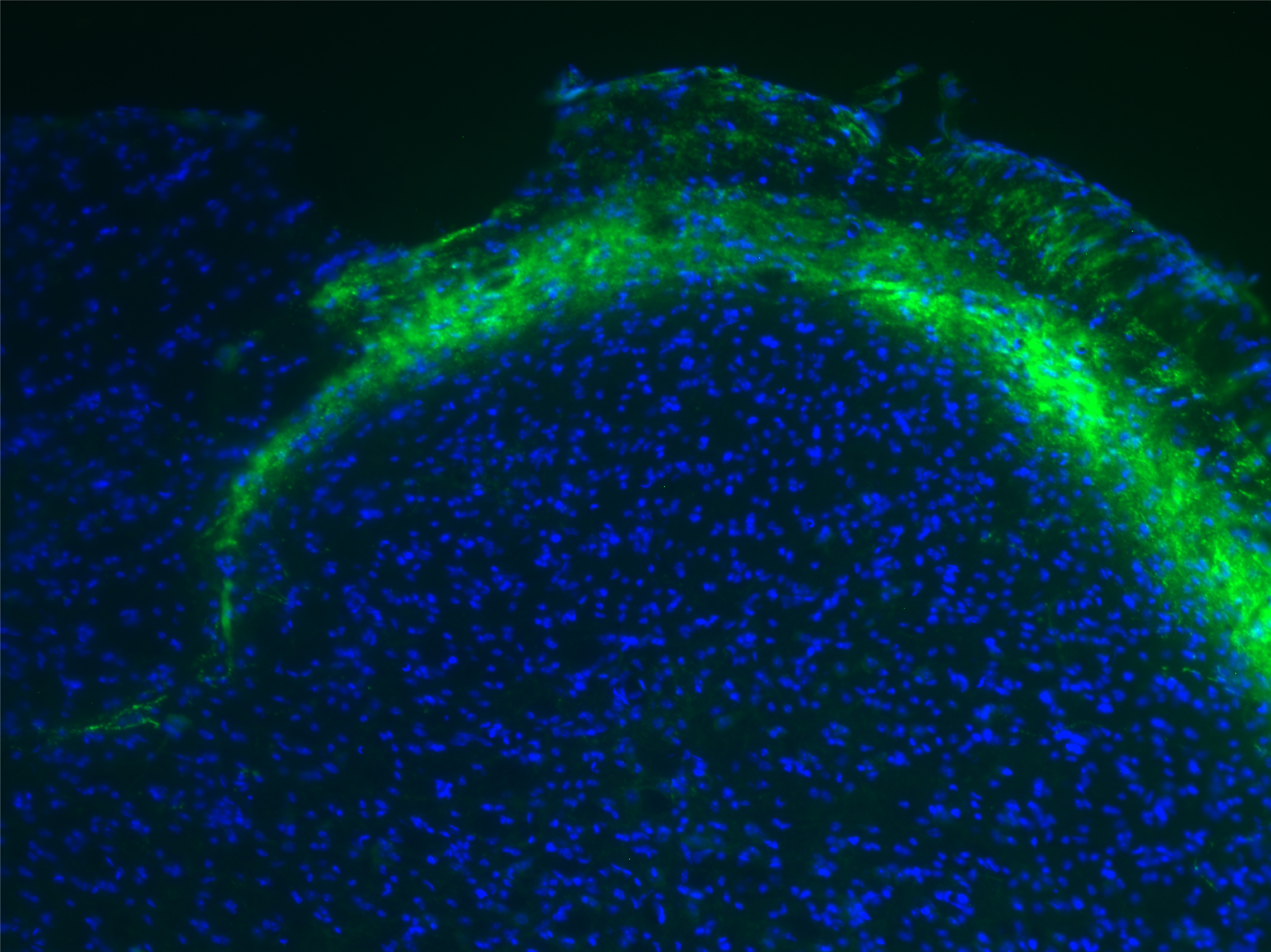
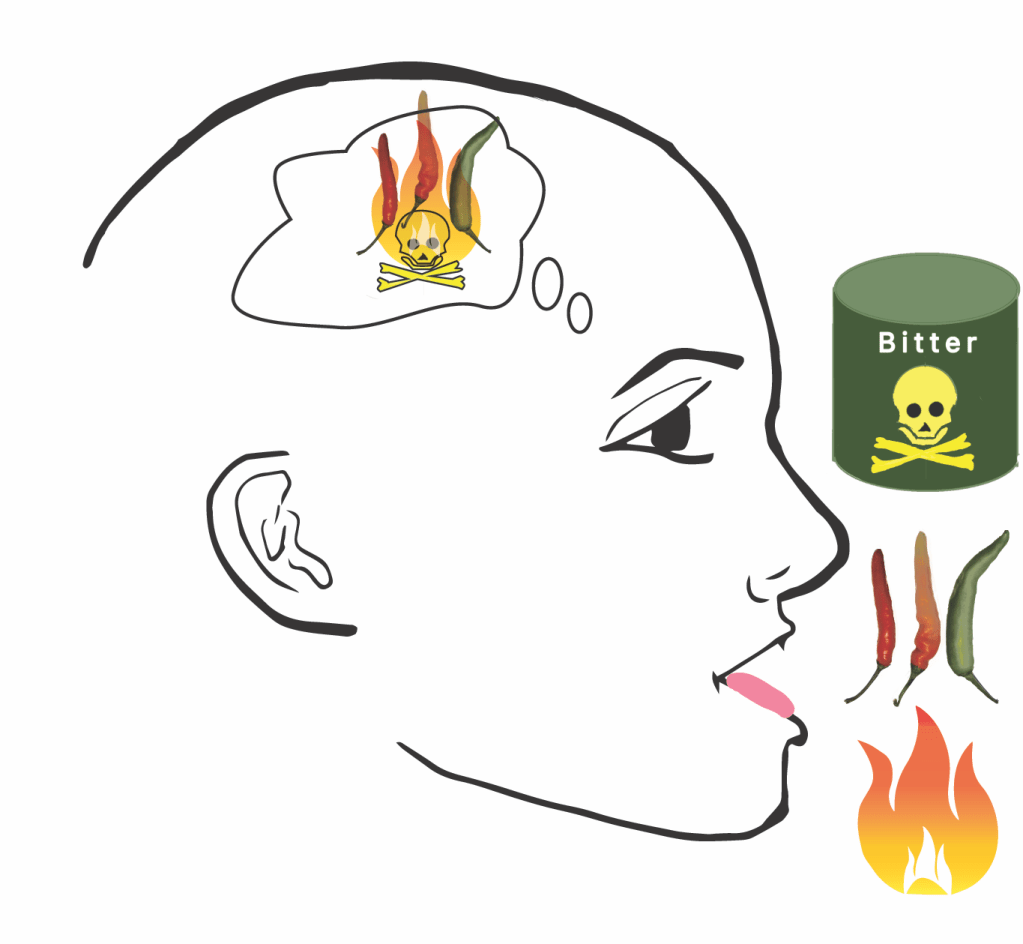
Our lab studies how the nervous system represents information about the temperature sense (thermosensation) and taste. Although appearing unrelated at first glance, both thermosensation and taste have ties to supporting homeostasis and protective behaviors across animals, humans included. For example, the aversive bitter taste of toxins and the noxious sensation of tissue-damaging heat both signal dangers to avoid.
Historically, thermosensory and taste biology were investigated separately from one another. However, recent functional studies from our lab discovered that afferent pathways for these senses come together and reach common neurons in deeper brain nuclei associated with sensory valence (e.g., cues linked to pleasure or harm) and emotion. Our data show this overlap is organized in ways that imply valence features of thermal and taste sensations are, in part, represented together in the brain, as parts of a larger, multisensory neural code. The neurobiological seams of this overlap are understudied and hold critical clues to the functional organization of gustatory and thermosensory neural pathways, which remain open questions. This concept is also relevant to health-related neuroscience questions, including how taste sensations influence food acceptance and how neural messages related to pain, which are partly carried by thermosensory neurons, are conveyed by and may interact with other senses in brain pathways.
Studies in our lab test hypotheses about the functional organization of neural circuits that combine and integrate thermosensation with taste. Our work emphasizes delineating biological mechanisms that underlie dependencies that arise between these senses in neurobehavioral responses. To this end, our experiments take a multidisciplinary approach that includes systems neurophysiology and behavior, molecular- and genetic-assisted control of neurons in vivo for functional and circuit mapping studies, computational and advanced analytical methods, and engineering and development of novel experimental hardware supporting our new direction of research.
Our research is supported by funding from the National Institutes of Health.
 sensory neurobiology laboratory